Sauna, or sauna bathing, is one of the more popular ways people take care of their bodies, whether they exercise regularly or not. It can leave the body feeling relaxed, ease fatigue, and help you feel refreshed after a stressful or physically demanding day.
Many people head to the sauna after a workout to let the body rest, or use it as part of a Wellness Routine to build a moment of calm for both body and mind. But heat should be used sensibly, so you get the benefit without adding unnecessary risk.
What Is a Sauna?
A Sauna uses heat to help the body relax and sweat. It is typically a room kept at high temperature with relatively low humidity. Traditional sauna culture has its most distinctive roots in Finland.
When the body is exposed to heat, skin temperature rises, blood vessels near the skin dilate, the heart beats slightly faster, and the body begins to sweat to release heat.
This process leaves many people feeling lighter, more relaxed, and looser in the muscles after stepping out of the sauna room.
Benefits of Sauna
Used for the right amount of time at the right temperature, a sauna may support a sense of comfort and physical recovery in several ways.
Helps the Body Relax
Heat helps tight or tired muscles loosen up, which makes a sauna a good fit for days when you have exercised, worked hard physically, or sat in the same position for a long time.
The quiet, warm atmosphere also leaves many people feeling calmer, with reduced tension and a break from the noise around them.
Stimulates Blood Circulation
When the body is exposed to heat, blood vessels near the skin dilate and the heart has to pump more blood to help release that heat.
This means circulation responds somewhat like light physical activity while you are inside the sauna room.
Can Leave Skin Feeling Clean and Refreshed
During a sauna session, the body sweats more, which helps carry some oil and surface dirt away from the skin.
After a sauna and a shower, skin often feels cleaner and more refreshed.
That said, sweating is not the body's main route for eliminating toxins. That job still belongs mainly to the liver and kidneys.
May Support Heart Health Over the Long Term
Some research has found an association between regular sauna use and a lower risk of cardiovascular disease in certain populations.
However, sauna use cannot replace exercise, a healthy diet, or managing other risk factors.
How Does Sauna Fit Everyday People?
You do not need to be an athlete to use a sauna.
For office workers, people who sit in front of a computer for long stretches, or anyone worn down by daily life, a sauna can be a short break that eases physical tension and gives the mind a rest from constant stimulation.
Some people build Sauna into their routine after work, or before a day off, to create a feeling of resetting the body before moving on to something else.
Why Is Sauna Good After Exercise?
After exercise, muscles can feel tight and the body is still in a heightened state. A short sauna session, taken after your heart rate has settled back down, can help muscles relax and ease the body gradually into recovery.
The important part is to hydrate and rest first. After exercise, you have likely already lost fluid through sweat, and heading straight into a sauna can increase the risk of dehydration.
How Does Sauna Pair With Ice Bath?
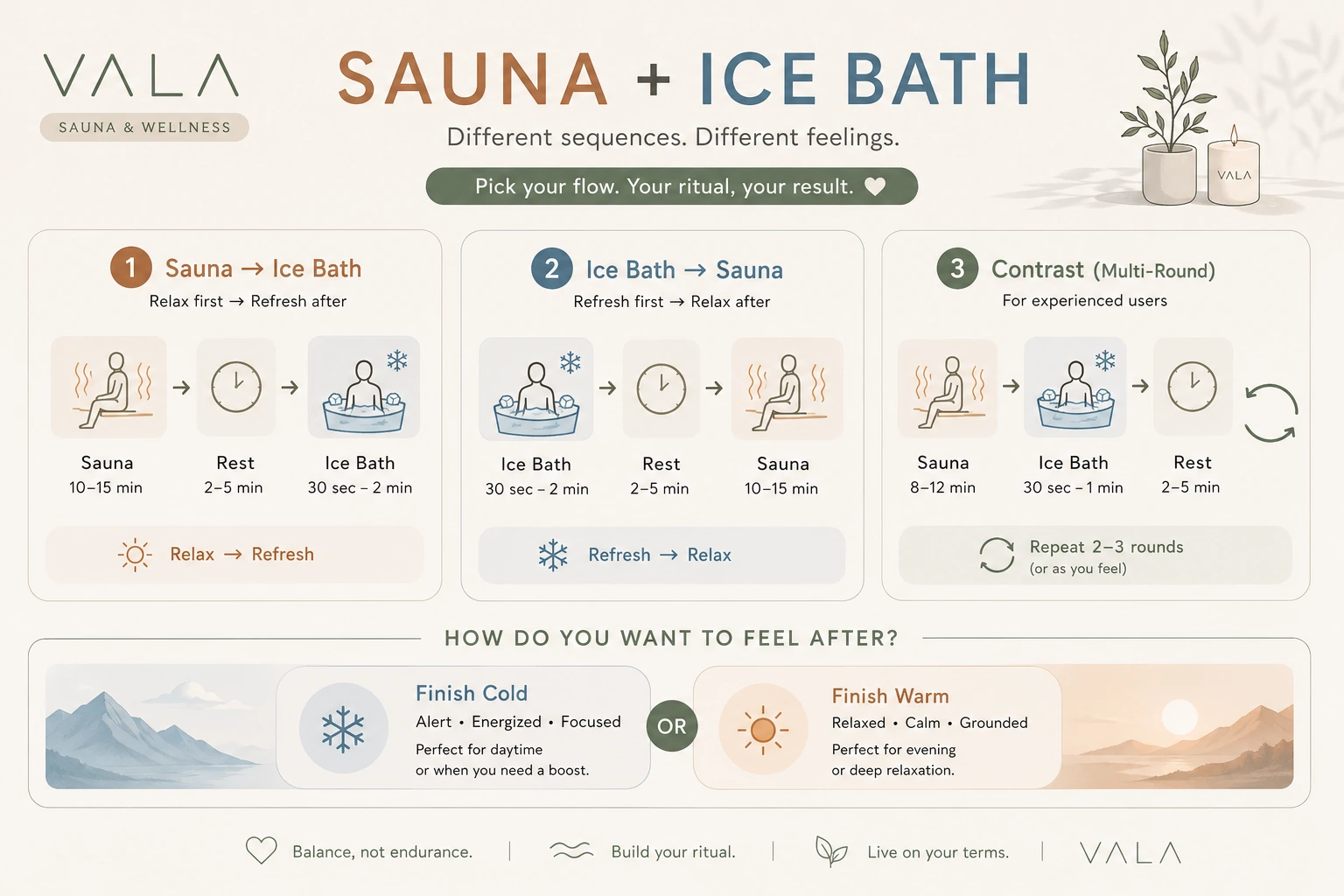
Many people alternate Sauna with Ice Bath, or Cold Plunge, to combine the relaxation of heat with the refreshing jolt of cold.
A simple example: 10 to 15 minutes in the Sauna, a short rest, 1 to 5 minutes in an Ice Bath, then rest again while the body adjusts.
Switching between hot and cold makes the circulatory and nervous systems adapt to changing temperatures, so it is worth starting with short sessions rather than going for the most intense heat or cold right away.
For many people, the appeal of this routine is the contrast: relaxed from the Sauna, then alert and refreshed after the Cold Plunge.
How Long Should You Stay in a Sauna?
Beginners can start with around 5 to 10 minutes per round.
Once your body gets used to it, you can gradually extend the time based on your own comfort, but as a rule you should not force yourself to stay in the sauna room once it starts to feel like too much.
Around 15 to 20 minutes per round is enough for most people.
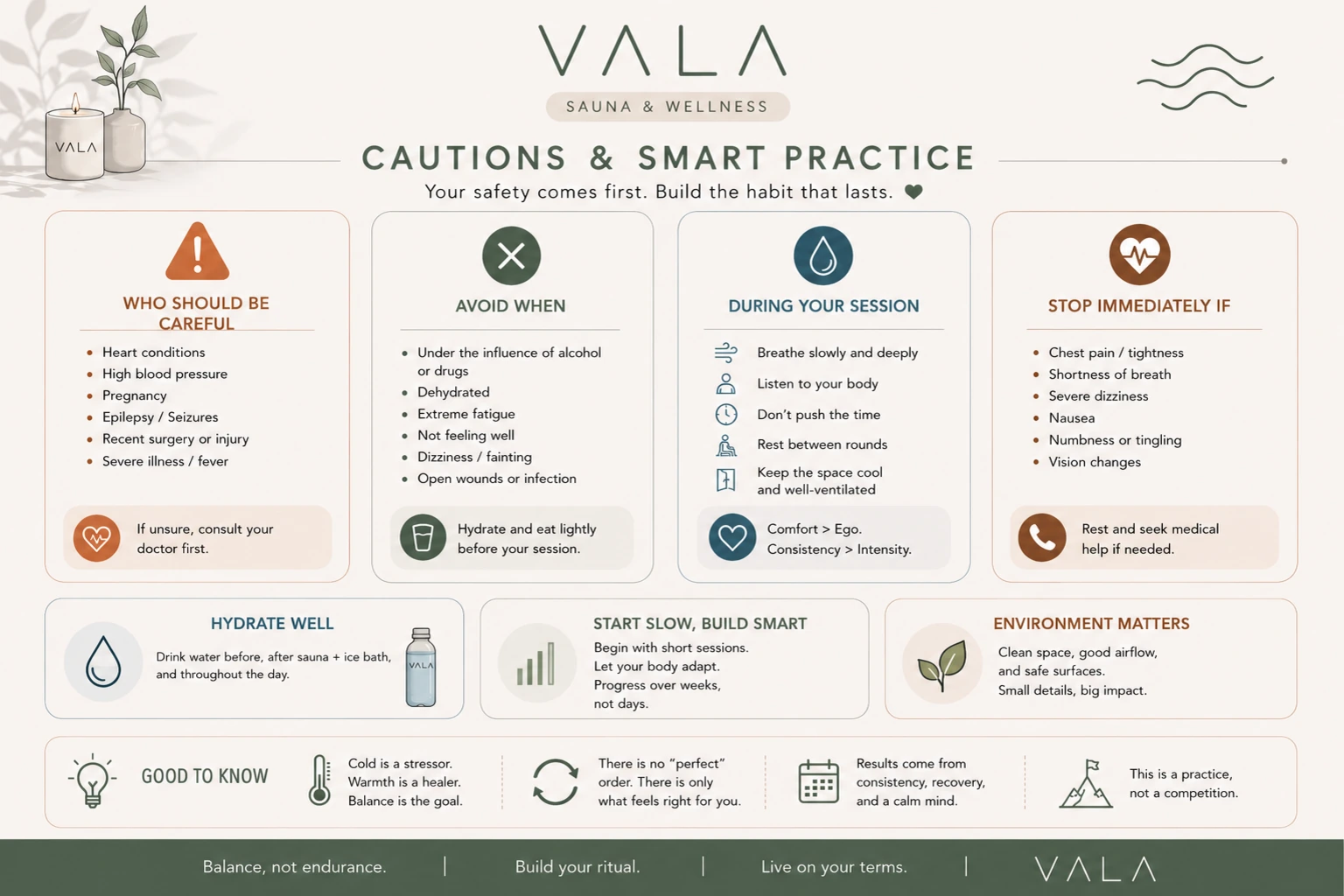
More important than any number is paying attention to your body. If you start to feel faint, nauseous, notice heart palpitations, or anything unusual, leave the room immediately.
How to Use a Sauna Safely
1. Hydrate first
Drink water before entering a sauna, especially if you have just exercised, since your body may have already lost fluid through sweat.
After the sauna, drink more water to replace what you lost.
2. Avoid a big meal beforehand
Leave a gap of about 1 to 2 hours after a heavy meal, so your body is not handling digestion and heat at the same time.
3. Start with a short session
Beginners do not need to push for a long stay. Starting with around 5 to 10 minutes and gradually increasing as you get used to it is the safer approach.
4. Remove metal jewellery
Rings, necklaces, watches, or other metal jewellery can heat up inside a sauna and may irritate or burn the skin.
5. Leave immediately if something feels wrong
If you feel dizzy, faint, nauseous, notice palpitations, have trouble breathing, or feel unbearably hot, do not push through it.
Precautions for Sauna Use
A sauna causes the body to lose fluid and makes the cardiovascular system adapt to heat.
Anyone with an existing health condition should consult a doctor first, particularly people with:
- Heart disease or vascular disease
- Poorly controlled high or low blood pressure
- Kidney disease
- Dehydration
- Pregnancy, or a health condition that is sensitive to heat
Avoid using a sauna after drinking alcohol. Both heat and alcohol can increase the risk of dehydration, fainting, and loss of consciousness.
Does Sauna Really Flush Out Toxins?
The idea that a sauna "detoxes" the body through sweat comes up often, but physiologically, the liver and kidneys remain the body's main organs for eliminating waste.
What a sauna clearly does is make the body sweat, help release heat, and create a feeling of relaxation.
So if you want to describe what a Sauna actually offers, phrases like helps the body relax, feel refreshed, and supports circulation line up with how the body actually works, more accurately than saying a sauna flushes toxins directly out of the body.
Sauna Is More Than Just Sitting Until You Sweat
For some people, Sauna is a way to rest muscles after exercise. For others, it is quiet time alone after a workday. And for those into Wellness, it might be part of a Routine paired with Ice Bath to alternate between heat and cold.
Whatever the purpose, whether it is relaxation, physical care, or simply time to rest, the point is never to compete over who can handle the heat longest.
A good sauna session is one you walk away from feeling comfortable, refreshed, and still fully in control of your body.
If you would like to experience it for yourself, Vala Sauna in Hat Yai offers a calm, family-run setting to try a proper sauna session, on its own or paired with an Ice Bath as part of a hot and cold routine.
Have questions, or want to reserve a visit? Call us or message us on LINE at qpjwi before you come, so we can check space and help you choose a comfortable time.